
SEASON 8 — UNMASKING JUSTICE
Season 8 of Silent Screams, Loud Strength — Unmasking Justice is a constitutional safeguarding curriculum examining procedural harm, institutional fragmentation, participation impairment and operational accountability within modern family justice systems. Supported by The Directive, the season connects podcast analysis with legal-policy articles on evidential erasure, disclosure wars, litigation exhaustion, neutrality, safeguarding continuity and SAFECHAIN™ reform infrastructure.
PROCEDURAL FAIRNESS
Procedural fairness is not procedural appearance. This article examines the legal foundation of fair hearings, natural justice, equality of arms, participation integrity, trauma-informed adjudication and the statutory duties that require courts and public bodies to preserve meaningful fairness in practice.

HOW THEY CHOOSE THE COURT WHERE TRUTH DOES NOT COUNT
When legal strategy becomes a search for the court where truth carries the least force, procedural fairness collapses. This article examines forum shopping, procedural capture, manufactured complexity, trauma-induced silence, Article 6 rights and the constitutional danger created when evidential integrity no longer operates consistently.

JUSTICE IS FOR SALE
When legal strategy becomes a search for the forum where official evidence can be disregarded, justice is no longer neutral. This article examines forum shopping, procedural capture, manufactured complexity, trauma-induced silence and the constitutional crisis created when truth becomes conditional.
Reform of Form E, Clean Break and Forum Shopping
A forensic SAFECHAIN™ article on the structural failure of Form E disclosure, the risks of Clean Break finality before truth, and the impact of forum shopping on equality of arms within Financial Remedy proceedings.
SAFECHAIN™ LOCAL AUTHORITY & HOUSING SAFEGUARDING FRAMEWORK
The SAFECHAIN™ Local Authority & Housing Safeguarding Framework establishes a mandatory operational standard for responding to domestic abuse, homelessness, housing insecurity and safeguarding risk. It sets out clear duties for local authorities, housing departments, housing associations, temporary accommodation providers and adult social care services to protect victims, prevent unsafe placements, uphold participation integrity and comply with statutory obligations.
SAFECHAIN™ JUDICIAL FRAMEWORK
The SAFECHAIN™ Judicial Framework sets out a clear safeguarding and participation integrity standard for courts dealing with domestic abuse, trauma, coercive control and vulnerability. It challenges procedural neutrality where it reproduces fear, silence or inequality, and requires courts to recognise trauma presentation, protect effective participation and apply human rights duties throughout proceedings.

THE SOVEREIGN VERDICT
Modern institutions increasingly recognise vulnerability, trauma and coercive control formally, yet fragmented systems continue producing procedural harm, participation collapse and safeguarding failure operationally. The Sovereign Verdict examines the constitutional future of justice, operational accountability and the transition from symbolic safeguarding toward institutional interoperability.

THE BLACK BOX
Modern institutions increasingly recognise vulnerability, trauma and coercive control formally, yet fragmented systems continue producing procedural harm, participation collapse and safeguarding failure operationally. The Sovereign Verdict examines the constitutional future of justice, operational accountability and the transition from symbolic safeguarding toward institutional interoperability.

THE PARADOX OF THE PART-TIME JUDGE
This policy paper examines the structural paradox created when part-time judicial appointments, active legal practice, professional proximity, forum shopping and fragmented regulation intersect. It argues that public confidence in justice requires more than individual integrity; it requires operational architecture capable of preventing procedural abuse, safeguarding equality of arms, and restoring visible judicial independence.
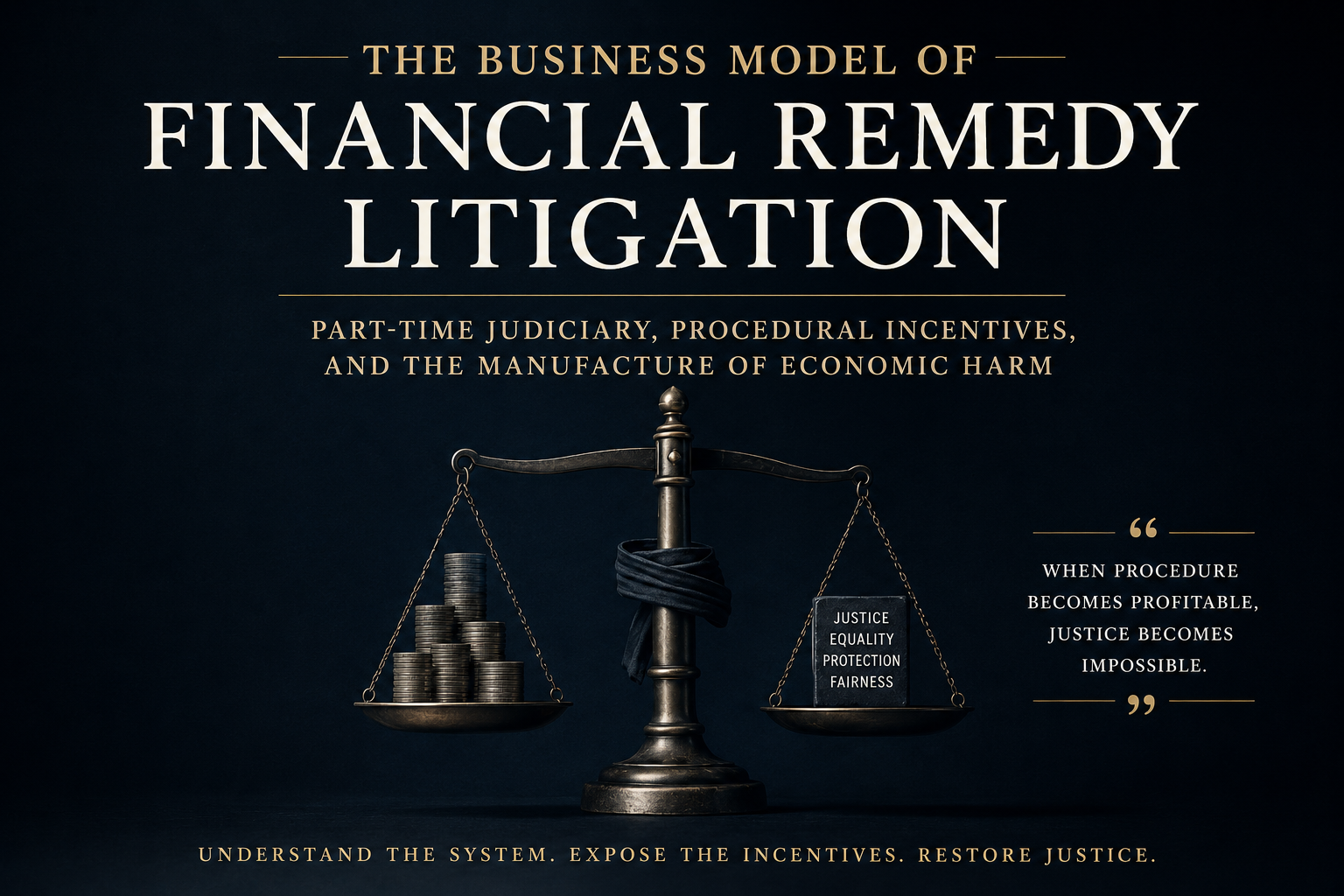
THE BUSINESS MODEL OF FINANCIAL REMEDY LITIGATION
Financial remedy proceedings were designed to resolve disputes fairly. Increasingly, however, procedural fragmentation, litigation asymmetry, and escalating costs risk manufacturing economic harm through the process itself. This SAFECHAIN™ analysis examines the constitutional implications of financial remedy litigation and the hidden procedural economy operating beneath it.
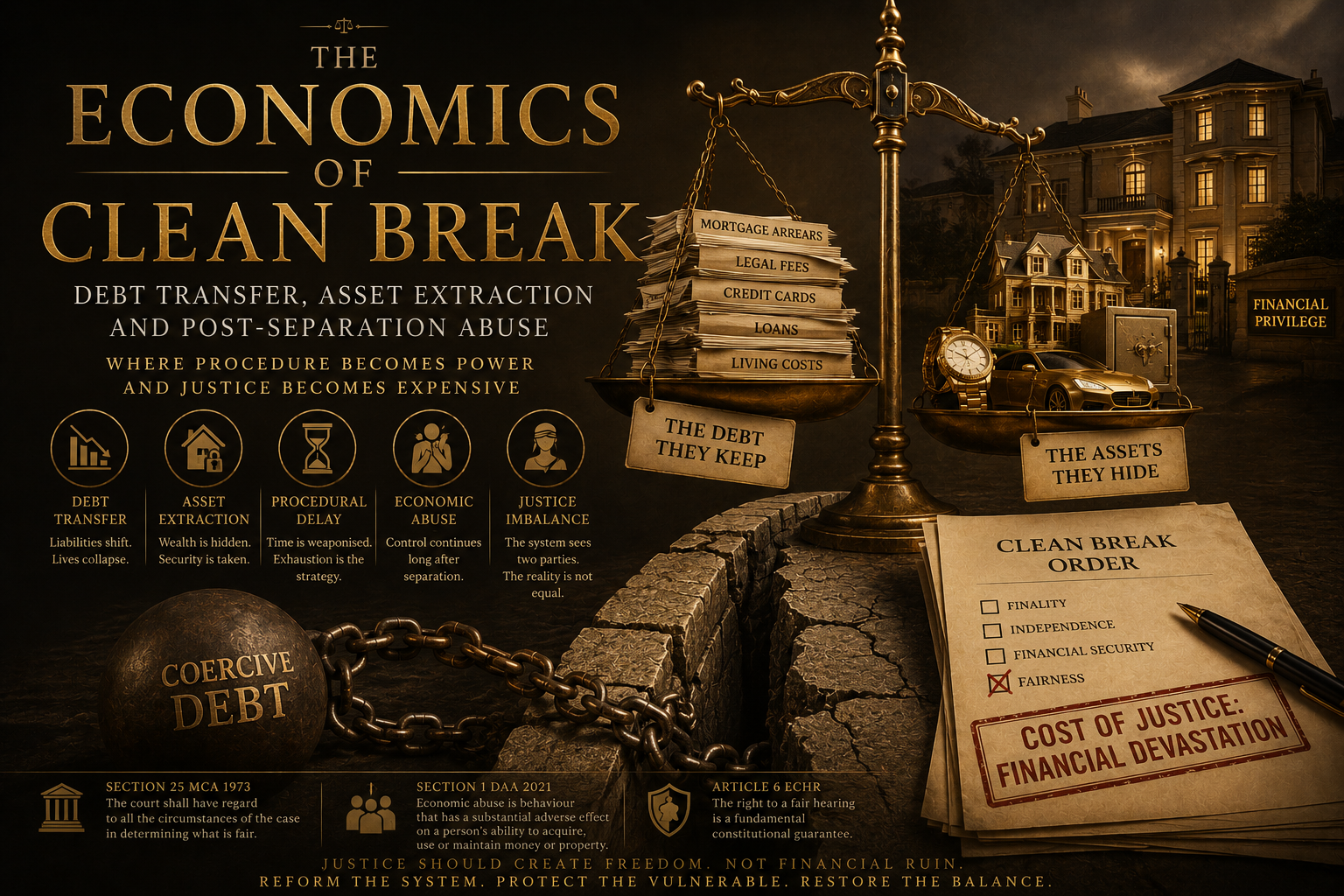
WHEN CLEAN BREAK BECOMES STRUCTURAL ERASURE
The clean break doctrine was intended to create freedom and finality after separation. Increasingly, however, financial remedy proceedings risk producing debt, procedural exhaustion, and structural erasure instead. This SAFECHAIN™ analysis examines economic abuse, informational asymmetry, participation collapse, and the constitutional limits of procedural fairness.

THE ARCHITECTURE OF EXHAUSTION
Financial remedy proceedings were designed to deliver fairness and resolution. Increasingly, however, they risk producing debt, procedural exhaustion, and structural imbalance instead. This SAFECHAIN™ analysis examines forum shopping, coercive debt, disclosure asymmetry, and the hidden architecture of procedural harm within family court litigation.
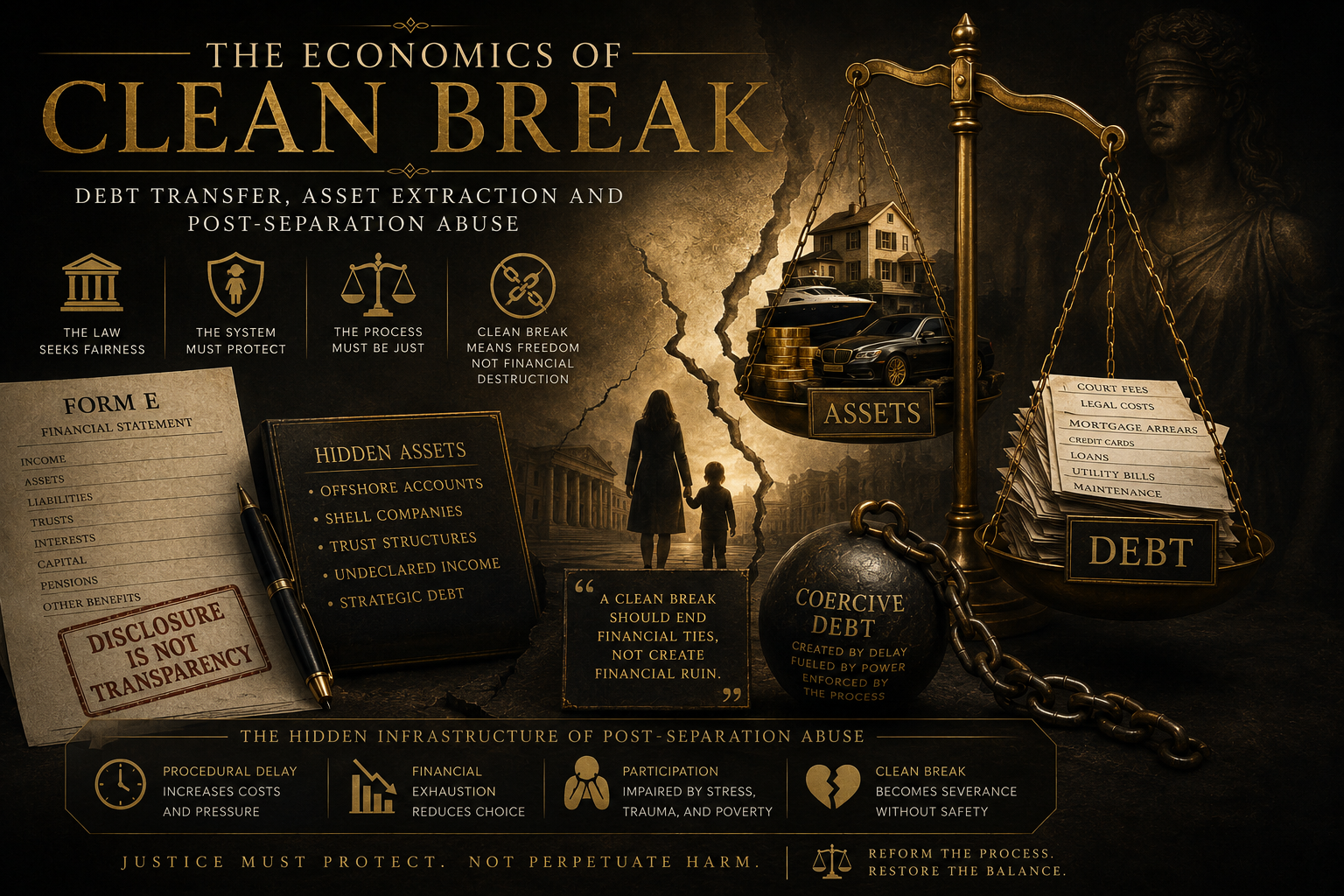
THE FRACTURED BENCH
Financial remedy proceedings depend upon continuity, fairness, and meaningful participation. Increasingly, fragmented adjudication, procedural imbalance, and litigation exhaustion are testing the constitutional limits of financial remedy justice itself. This SAFECHAIN™ analysis examines the growing crisis of structural coherence within family court proceedings.

COERCIVE DEBT BY DESIGN
Financial remedy proceedings were designed to deliver fairness and finality. But where coercive control, unequal resources, and defective disclosure intersect, the process can reproduce economic harm instead. This SAFECHAIN™ analysis examines how coercive debt becomes structurally embedded within financial remedy litigation.

THE PROCEDURAL MARKETPLACE
Financial remedy proceedings were designed to deliver fairness. Increasingly, they risk producing procedural exhaustion instead. This SAFECHAIN™ analysis examines forum shopping, fragmented adjudication, coercive debt, and how litigation itself can become an architecture of economic pressure.
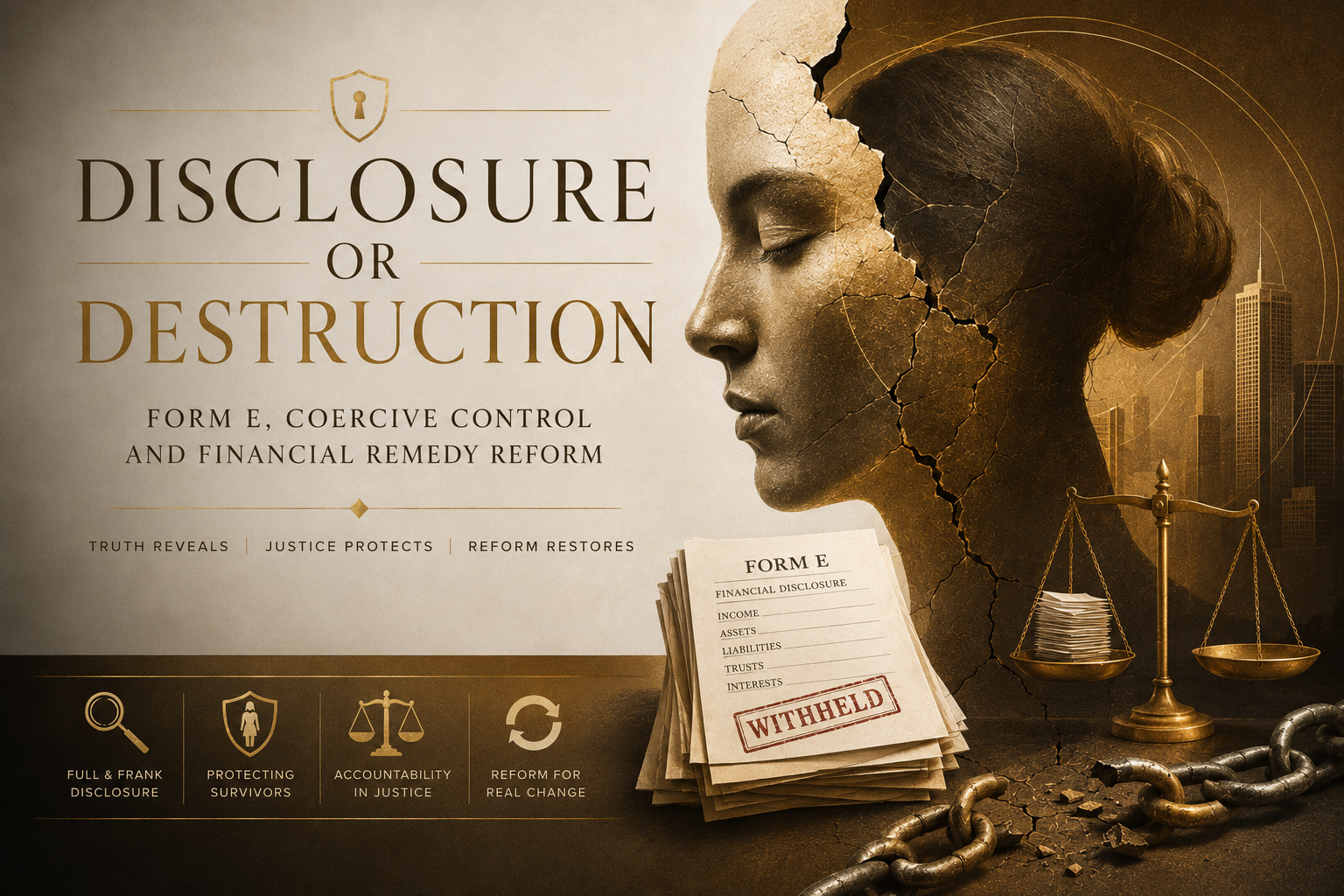
DISCLOSURE OR DESTRUCTION
Form E is meant to reveal financial truth. But where coercive control, unequal resources, defective disclosure, and litigation pressure exist, financial remedy proceedings can become a machinery of exhaustion. This article examines how disclosure can become destruction — and why SAFECHAIN™ calls for operational safeguarding, verification, and systemic reform.
FORM E, CLEAN BREAK, AND THE PARADOX OF PART-TIME JUDGING
Violence Against Women and Girls cannot be resolved through awareness campaigns or isolated institutional promises. This article argues that government must adopt systemic safeguarding approaches rooted in operational accountability, trauma-informed justice, cross-agency continuity and implementation — and explains why SAFECHAIN™ offers a framework for action.

‘SYSTEMIC APPROACHES’ ARE NOW ESSENTIAL IN THE GOVERNMENT RESPONSE TO VIOLENCE AGAINST WOMEN AND GIRLS
Violence Against Women and Girls cannot be solved through awareness campaigns, isolated reports or fragmented safeguarding responses. This article argues that government must move toward systemic approaches rooted in interoperability, operational continuity, accountability and implementation — and explains why SAFECHAIN™ offers a structural framework for action.

WHEN AWARENESS BECOMES A SUBSTITUTE FOR ACTION
Domestic abuse and mental health are not annual awareness themes. For many survivors, they are everyday realities shaped by coercive control, financial harm, housing insecurity, procedural exhaustion and institutional failure. This article argues that the time for further reports has passed. What is needed now is accountability, continuity, implementation and SAFECHAIN™.