
FORUM SHOPPING & JURISDICTIONAL INTEGRITY
This article explores why jurisdiction is not merely a technical legal issue, but a safeguarding, governance, and participation issue. Through the SAFECHAIN™ concept of Jurisdictional Integrity™, it examines how venue, forum selection, procedural access, and structural fairness determine whether justice can be meaningfully delivered.

Two Orders. One Property. One Unanswered Question.
When a court permits evidence to be gathered but allows the disputed property to be sold, justice faces a critical question: can rights still be protected once the subject matter has gone?
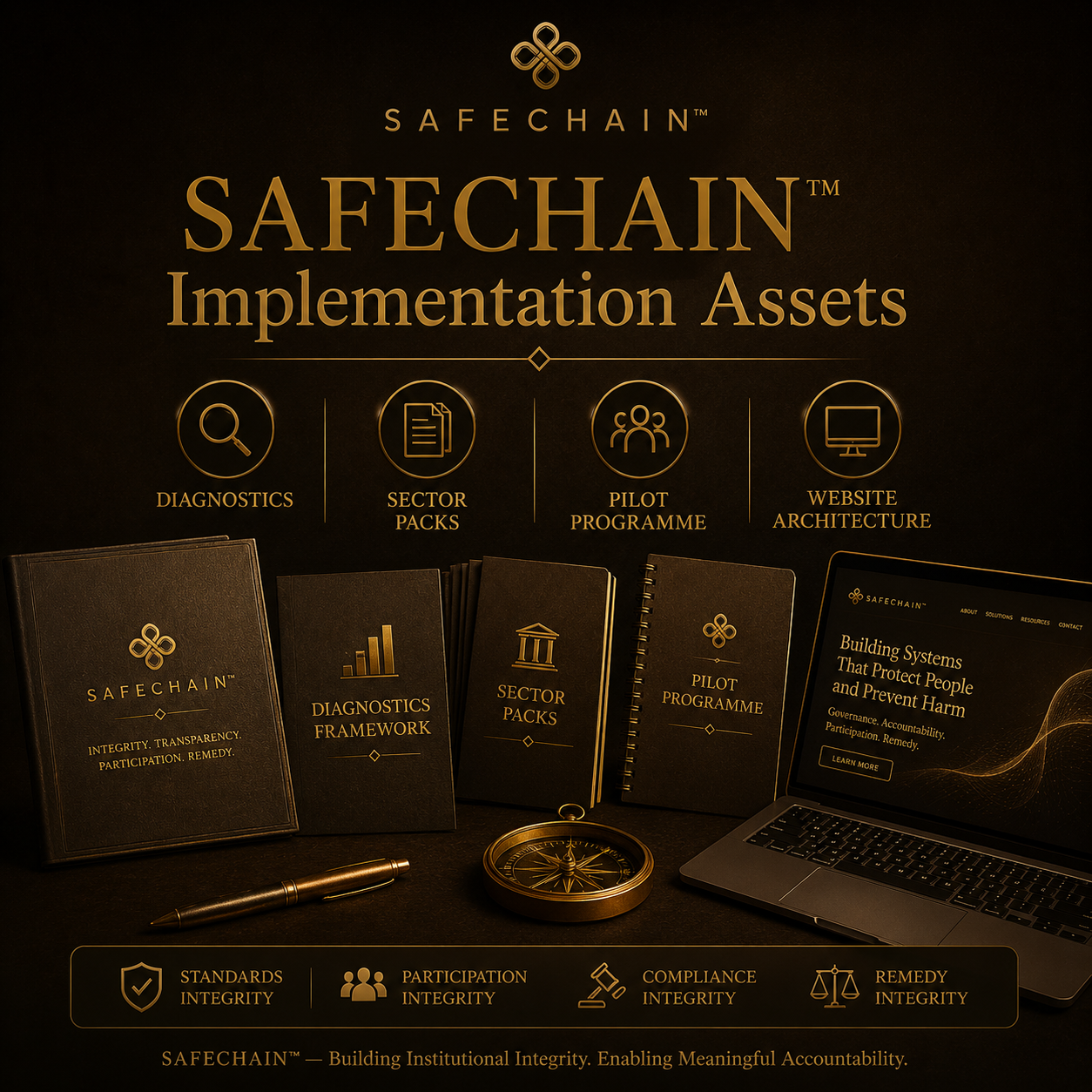
From Theory to Practice: Building the SAFECHAIN™ Governance System
SAFECHAIN™ is entering a new phase. Moving beyond governance theory, the project now includes diagnostic tools, institutional audits, sector implementation frameworks, and pilot programmes designed to measure participation, vulnerability, safeguarding, accountability, and institutional health across modern systems.
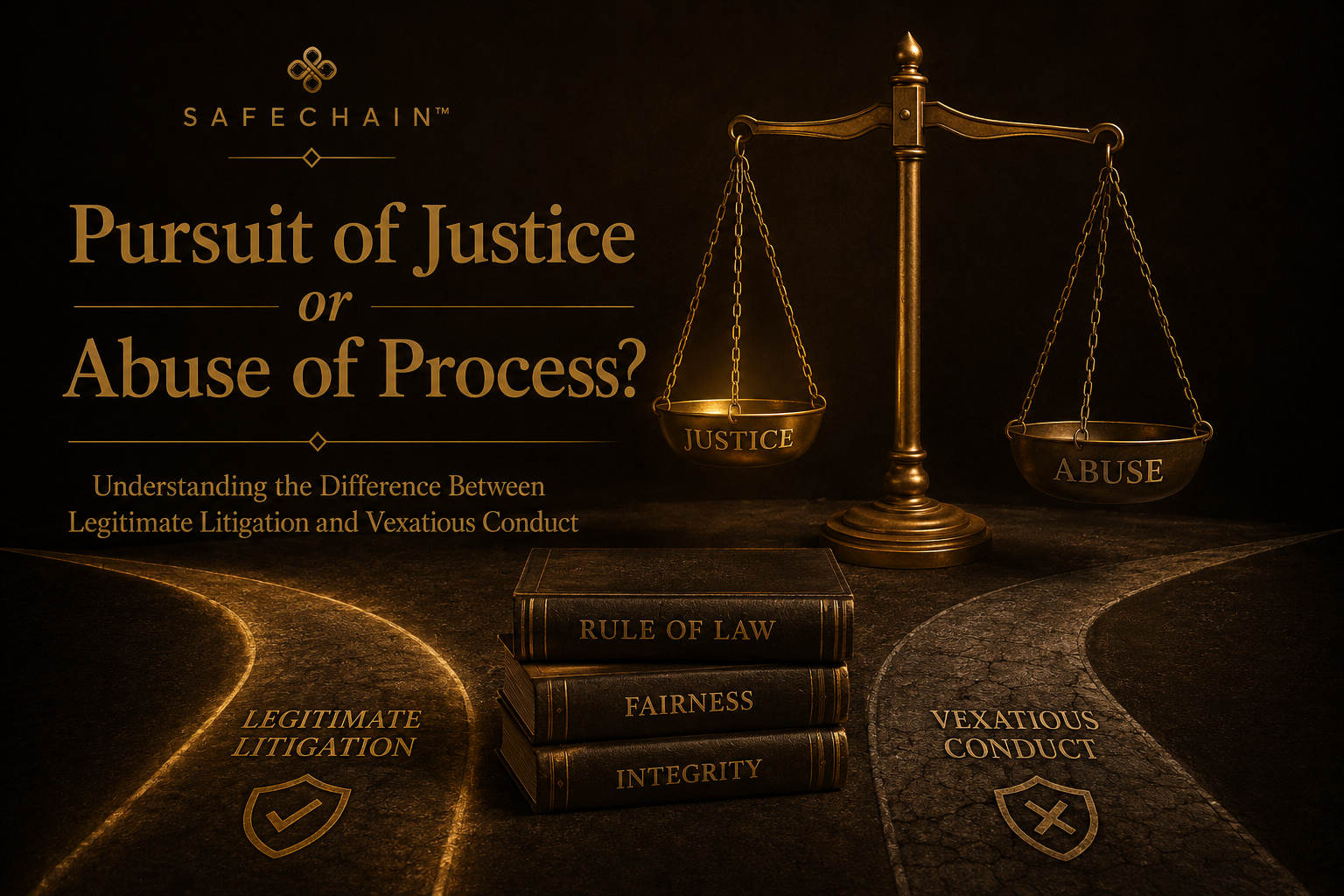
Pursuit of Justice or Abuse of Process?
Persistence is not vexatiousness. This article explains the legal difference between abusing the court process and pursuing justice through recognised legal routes where fraud, non-disclosure, procedural unfairness, or fresh evidence remain unresolved.

Two Hearings. One Question.
What happens when a court accepts that serious allegations deserve further investigation, grants time for evidence to be gathered, yet permits the asset at the centre of the dispute to be sold? This article explores the legal, constitutional, and human consequences of that question.

Why SAFECHAIN™ Built an Institutional Architecture
Why do the same institutional failures continue to emerge across courts, regulators, housing systems, financial institutions, safeguarding services, and public authorities? This introductory article to the SAFECHAIN™ Foundational Architecture Series explores the recurring structural patterns that shape participation, accountability, vulnerability recognition, safeguarding, implementation, and institutional trust.

THE REMEDY DEFICIT™
What happens when institutions recognise harm but fail to repair it? The Remedy Deficit™ explores the gap between acknowledgement and restoration, examining why complaints, findings, apologies, and recommendations are not enough when individuals remain burdened by the consequences of institutional failure.
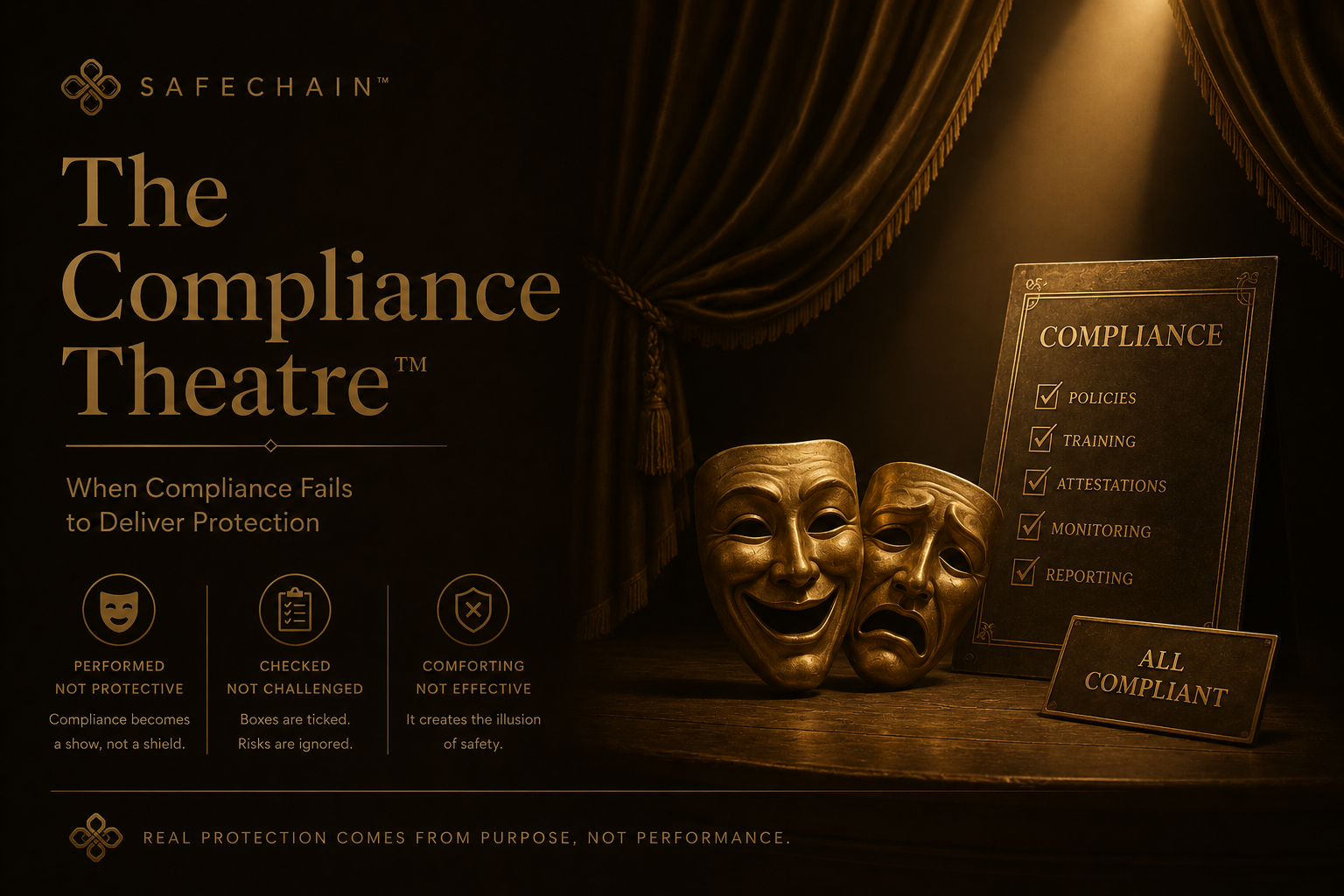
THE COMPLIANCE THEATRE™
The Compliance Theatre™ explores a growing institutional challenge: organisations that can demonstrate compliance yet struggle to deliver protection. Examining safeguarding, participation, accountability, governance, and outcome integrity, the paper questions whether compliance alone is an adequate measure of success.
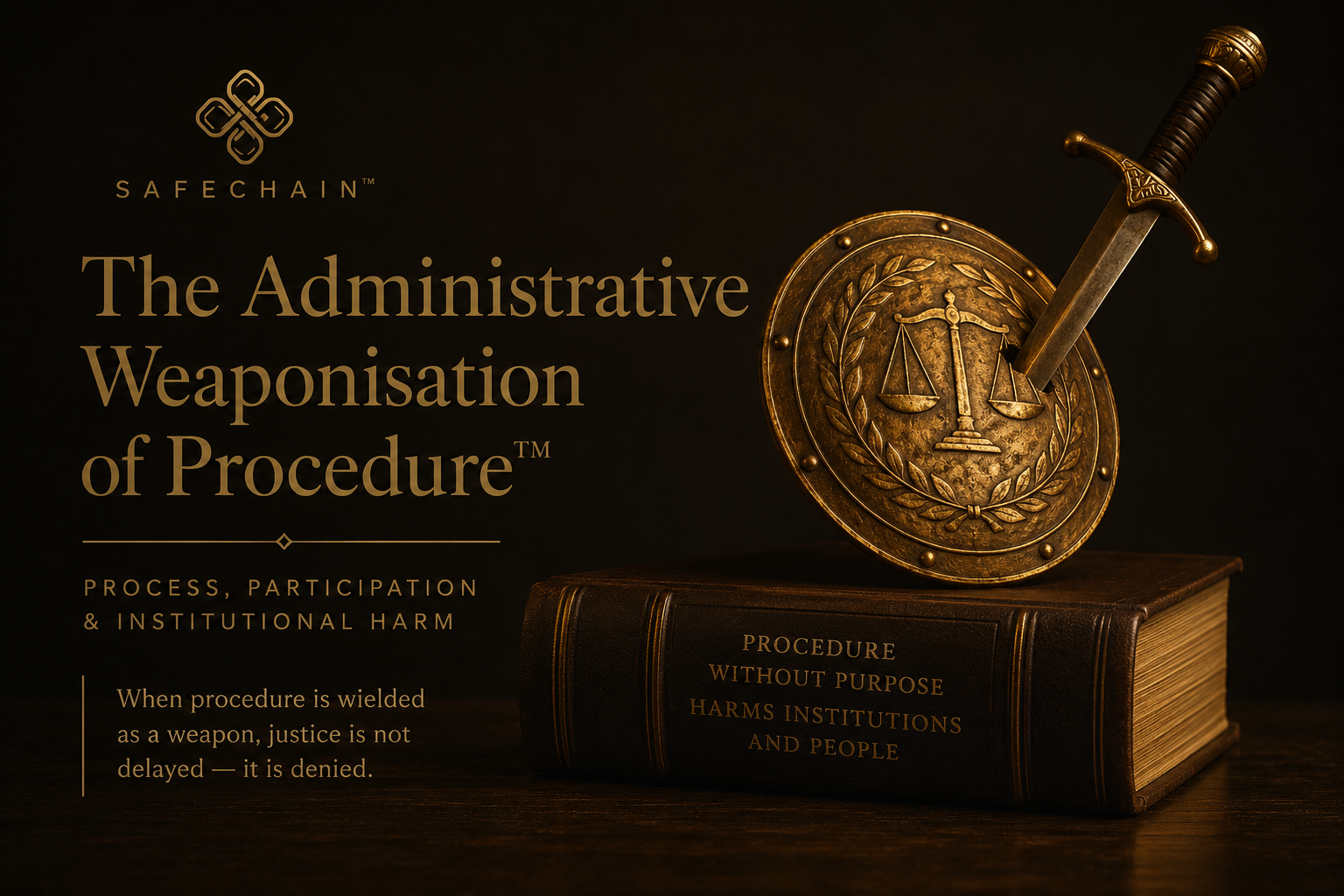
THE ADMINISTRATIVE WEAPONISATION OF PROCEDURE™
The Administrative Weaponisation of Procedure™ explores how administrative processes, procedural requirements, and institutional bureaucracy can unintentionally become barriers to participation, fairness, safeguarding, and accountability. The paper examines procedural burden, disclosure fatigue, institutional complexity, and the growing gap between process and purpose.

THE COSTS MACHINE™
The Costs Machine™ explores how cumulative financial pressure generated by legal, regulatory, safeguarding, and institutional processes can gradually erode participation capacity. Examining economic attrition, coercive debt, disclosure costs, and legacy financial harm, the paper argues that participation should not depend upon financial endurance.
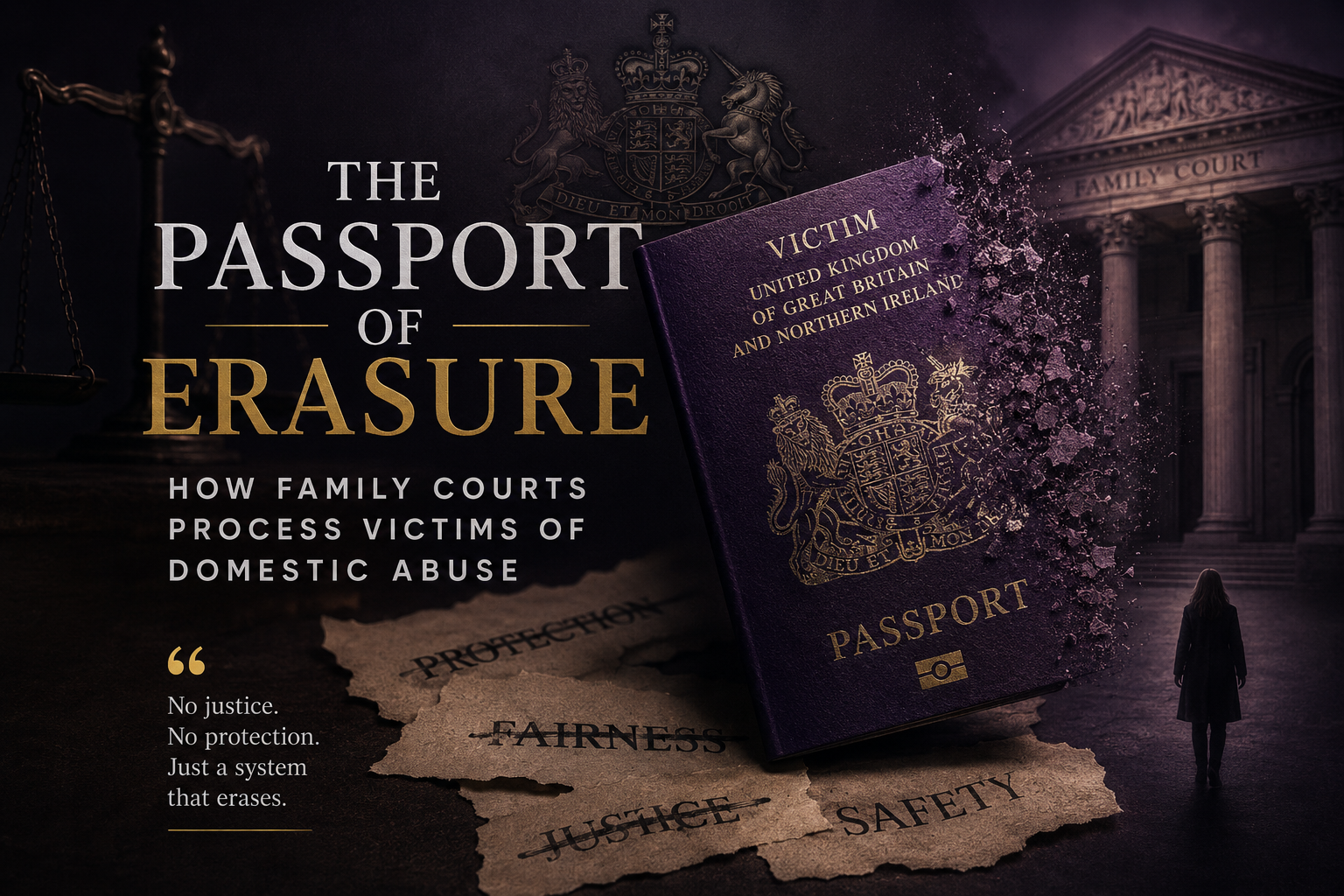
THE PARTICIPATION GAP™
The Participation Gap™ explores one of the most significant challenges facing modern institutions: the difference between formal access and meaningful participation. Examining vulnerability, procedural attrition, equality of arms, and participation integrity, the paper argues that fairness depends not only on access to a process, but on the practical ability to engage with it.

THE EVIDENTIAL DISCONTINUITY CRISIS™
What happens when critical evidence exists but no institution can see the whole picture? The Evidential Discontinuity Crisis™ explores how fragmented records across housing, healthcare, courts, safeguarding, banking, and regulatory systems create risks to fairness, accountability, participation, and justice.
DISCLOSURE INTEGRITY™
Disclosure is not paperwork. It is the mechanism through which truth enters institutional decision-making. This SAFECHAIN™ report explores Disclosure Integrity™, evidential equality, participation integrity, procedural fairness, Form E, Form A, and the constitutional importance of transparent information systems.

DOMESTIC ABUSE, FORM E, AND THE DISCLOSURE WARS
When financial remedy proceedings lose disclosure integrity, fairness itself is placed at risk. This article explores how domestic abuse, economic abuse, Form E disclosure, Form A applications, hidden financial information, and disclosure disputes can create participation barriers for vulnerable parties seeking justice.

Why Courts Can Get It Wrong When They Never See What Happens Next
The Other Side of the Door™ explores the gap between judicial decision-making and lived consequences. The article examines how courts may measure procedure, compliance, and case closure while remaining disconnected from the housing instability, financial harm, trauma, safeguarding risk, and participation barriers that may follow institutional decisions.

When the Record Becomes More Credible Than the Human Being
In Episode 13 of Silent Screams, Loud Strength — UNMASKING JUSTICE, Samantha Avril-Andreassen examines “The Documentation Divide” — the gap between lived reality and recorded reality. This article explores how records can become more powerful than truth when institutions rely on incomplete notes, flawed assumptions, fragmented evidence, trauma-blind documentation, and first-record advantage.

WHAT IS SAFECHAIN™?
What Is SAFECHAIN™? introduces SAFECHAIN™ as the UK’s integrated safeguarding infrastructure: a legally grounded, operationally measurable, and institutionally implementable framework designed to protect vulnerability across justice, housing, healthcare, financial services, education, regulation, and public administration.

From Frameworks to Policy Influence: Introducing the SAFECHAIN™ Phase A Reform Papers
SAFECHAIN™ introduces its Phase A Reform Papers: The Participation Gap™, The Shadow Ledger™, and The Coercive Debt Lifecycle™. These executive policy briefs translate the SAFECHAIN™ Governance Architecture into applied policy analysis across participation integrity, equality of arms, coercive debt, economic abuse, consumer vulnerability, safeguarding governance, and long-term institutional harm.


THE EVIDENTIAL MAZE
In Episode 12 of Silent Screams, Loud Strength — UNMASKING JUSTICE, Samantha Avril-Andreassen examines “The Evidential Maze” — how fragmented records across courts, police, healthcare, housing, social services, and safeguarding systems can weaken truth, obstruct participation, and undermine justice.