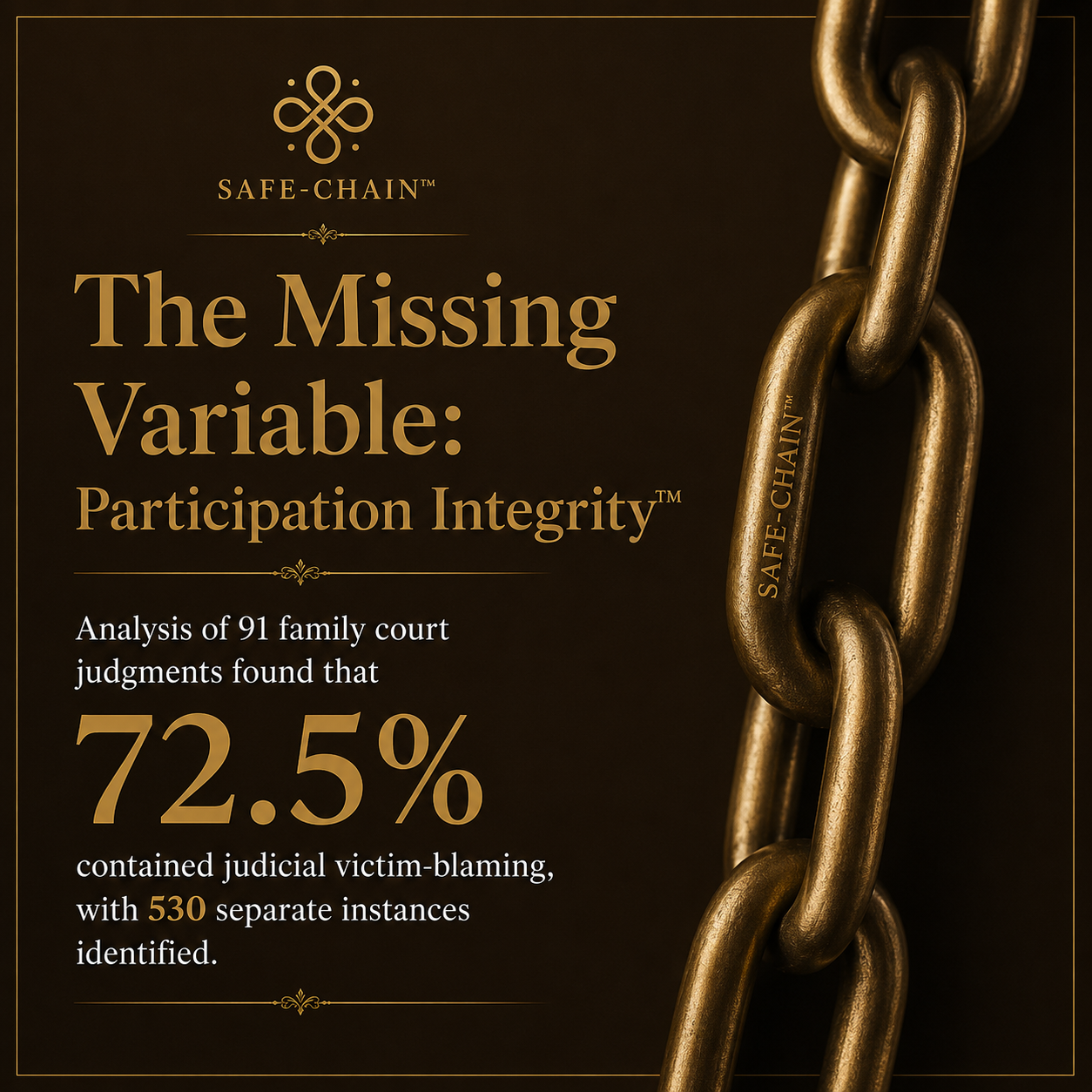
The Missing Variable: Participation Integrity™
The Right to Equality report identified judicial victim-blaming in 72.5% of reviewed family court judgments. The Domestic Abuse Commissioner's Everyday Business report found domestic abuse present in 87% of reviewed case files and 73% of observed hearings. SAFECHAIN™ argues that both reports expose the same missing variable: Participation Integrity™. Before courts can deliver justice, they must establish whether vulnerable survivors can participate effectively—not merely whether they are present

10 Things the Everyday Business Report Tells Us — And Why Safeguarding Must Become Infrastructure
Domestic abuse is not an exceptional feature of family justice—it is the operating environment. In this SAFECHAIN™ Intelligence Hub article, Samantha Avril-Andreassen examines 10 critical findings from the Domestic Abuse Commissioner's Everyday Business report and presents practical governance solutions through the Participation Gap™, Passport of Erasure™, Institutional Coordination™, Accountability Architecture™, and the SAFECHAIN™ Index.
Domestic abuse is not sitting at the edge of family justice.
Domestic abuse was found in 87% of reviewed family court case files and 73% of observed hearings. These 10 SAFECHAIN™ Intelligence Hub insights examine the report's most significant findings, including coercive control, economic abuse, the Participation Gap™, the Passport of Erasure™, institutional fragmentation, and the future of safeguarding reform.
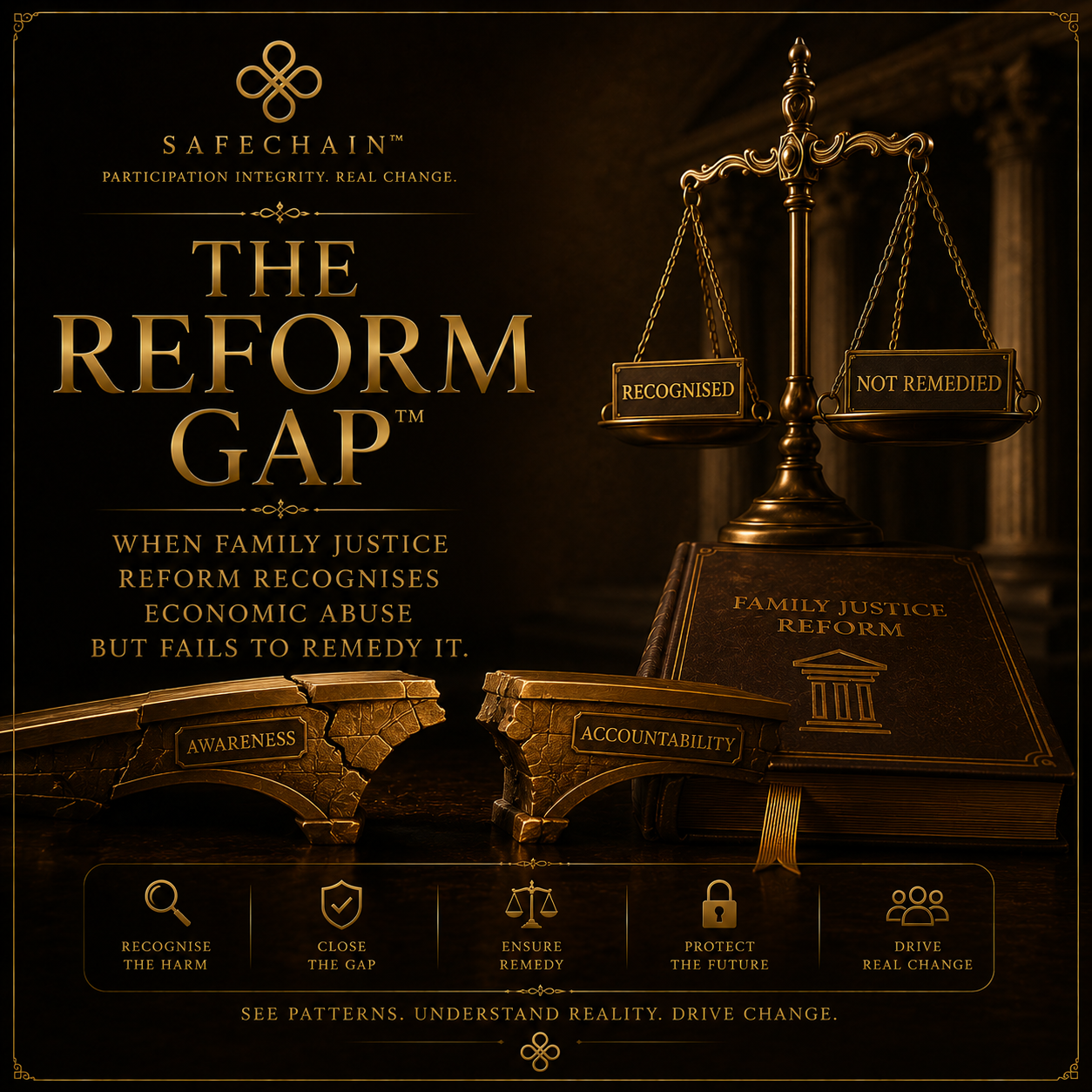
When Family Justice Reform Recognises Economic Abuse but Fails to Remedy It
Economic abuse is increasingly recognised within family justice, but recognition is not the same as remedy. This SAFECHAIN™ Intelligence Hub article explores how reform can acknowledge coercive control, non-disclosure, financial manipulation, and survivor vulnerability while still failing to correct the harm those abuses create.

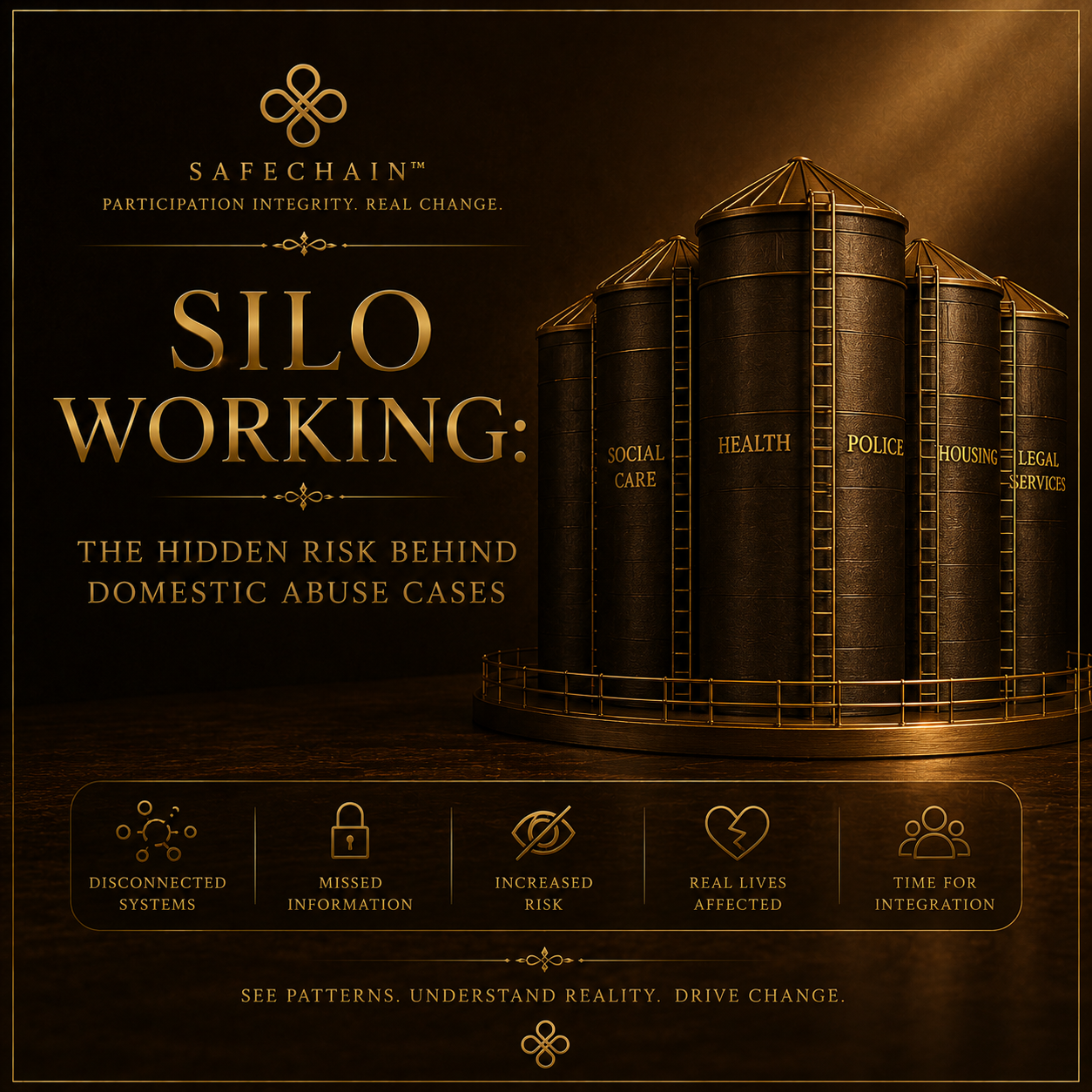
Silo Working: The Hidden Risk Behind Domestic Abuse Cases
Domestic abuse is often experienced as one continuous reality, yet institutions divide it into separate files, separate systems, and separate decisions. This SAFECHAIN™ analysis explores how silo working creates safeguarding failures, widens the Participation Gap™, and drives institutional fragmentation across justice, housing, healthcare, and financial services.
Everyday Business
If domestic abuse appears in 87% of family court case files, it is no longer an exceptional issue. It is the operating environment. This SAFECHAIN™ Intelligence Hub article examines why the Domestic Abuse Commissioner's Everyday Business report should transform how courts, banks, housing providers, and public institutions understand safeguarding and vulnerability.

REFLECTIONS ON THE MAGISTRATES’ ASSOCIATION INAUGURAL CONFERENCE ON DOMESTIC ABUSE AND STALKING
The Magistrates’ Association conference reinforced a critical safeguarding truth: abuse cannot be understood through isolated incidents. Risk becomes visible through patterns, harm through accumulation, and danger through escalation. This SAFECHAIN™ article explains why safeguarding must move from awareness to institutional connectivity.

When Endurance Becomes More Valuable Than Justice
In this episode of Silent Screams, Loud Strength — UNMASKING JUSTICE, Samantha Avril-Andreassen examines The Procedural Economy of Exhaustion™ — the hidden human economy beneath modern litigation, where time, delay, cost, trauma, cognitive load, emotional capacity, and procedural complexity can make endurance more powerful than justice.

The Most Expensive Lie in Modern Governance
When a person collapses under the weight of a system, institutions often treat the collapse as personal failure. This SAFECHAIN™ article examines how vulnerability becomes invisible, how harm is misread, and why governance must measure causation, not symptoms.

Beyond a Podcast: Building the SAFECHAIN™ Intelligence Architecture
SAFECHAIN™ represents the development of a new field of institutional safeguarding.
Through the integration of governance frameworks, accountability methodologies, participation models, financial vulnerability architectures, regulatory analysis and harm-prevention systems, SAFECHAIN™ provides a structured approach to understanding how preventable harm emerges within institutions and how that harm can be reduced.
The SAFECHAIN™ Intelligence Hub serves as the central repository for this work, connecting research, policy development, governance analysis, safeguarding methodologies, institutional diagnostics, regulatory reform proposals and accountability frameworks.
Rather than focusing solely on individual failures, SAFECHAIN™ examines the conditions that allow those failures to occur, persist and reproduce themselves across systems.
Its focus is institutional responsibility, governance integrity, safeguarding effectiveness, participation equity and the prevention of foreseeable harm.
SAFECHAIN™ is therefore not a commentary platform.
It is an institutional intelligence and reform architecture designed to strengthen accountability, improve decision-making and advance safeguarding practice across public, private and regulatory environments.

When Systems Know and Continue Anyway
Why do institutions continue to fail vulnerable people despite repeated warnings, investigations and reports? This flagship SAFECHAIN™ article connects The Accountability Gap™, Institutional Capture™, Regulatory Silence™, Legacy Harm™ and The Indictment™ into a single governance and safeguarding reform framework.
Coerced Debt, Financial Erasure and Why Reports Alone Will Never Be Enough
Domestic abuse does not always end when a relationship ends. Through coerced debt, damaged credit files, housing instability, and financial exclusion, survivors often carry the consequences of abuse for years. This SAFECHAIN™ article examines the Passport of Erasure™, financial safeguarding failures, the lessons of the Macpherson Report, and why implementation—not more reports—is now required.
When Debt Outlives the Abuse
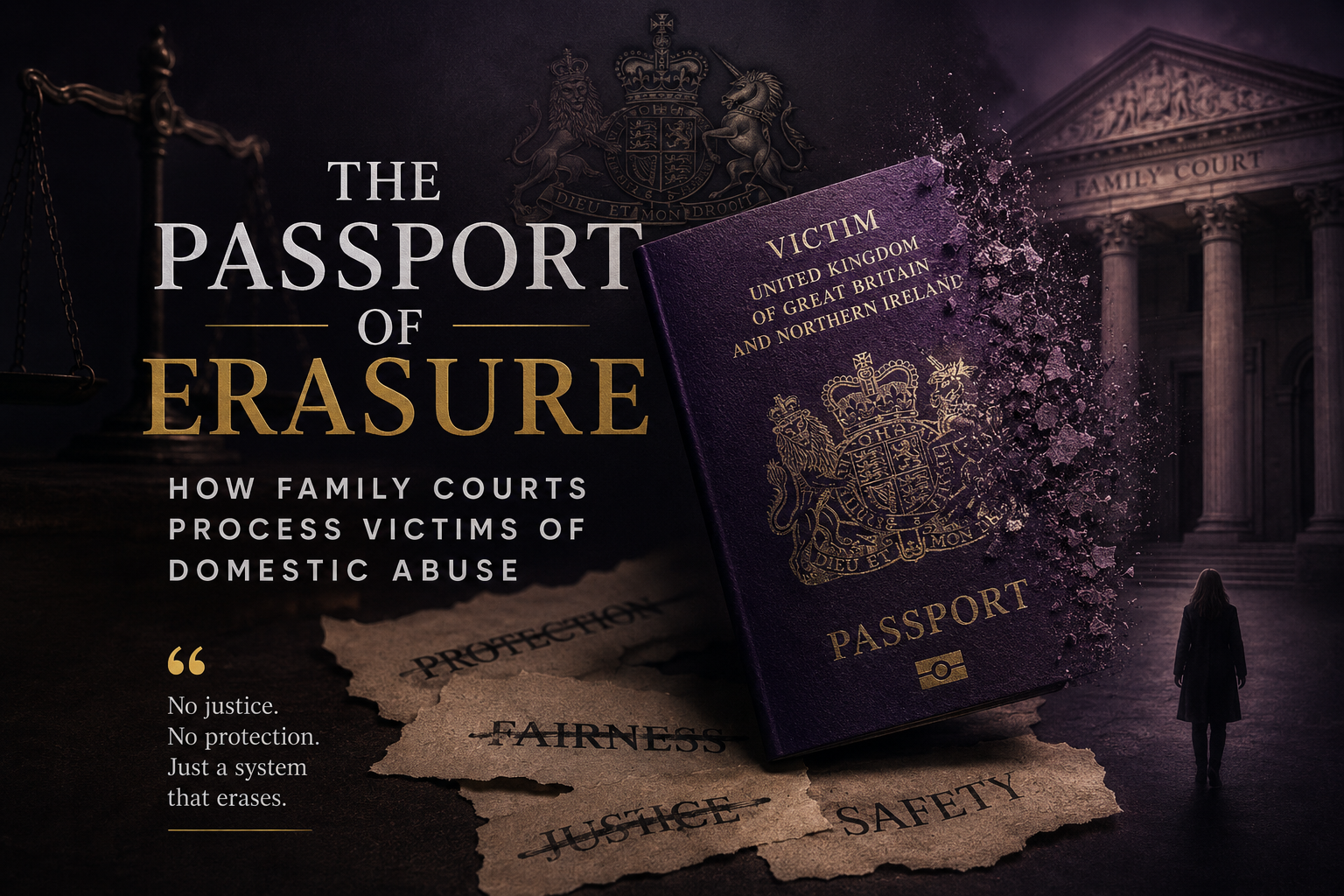
The abuse may end, but the debt often remains. The Passport of Erasure™ examines how coerced debt, damaged credit files, housing instability, and financial exclusion continue long after abuse has ended, and why safeguarding systems must evolve to support genuine financial recovery.
SAFECHAIN™ Register
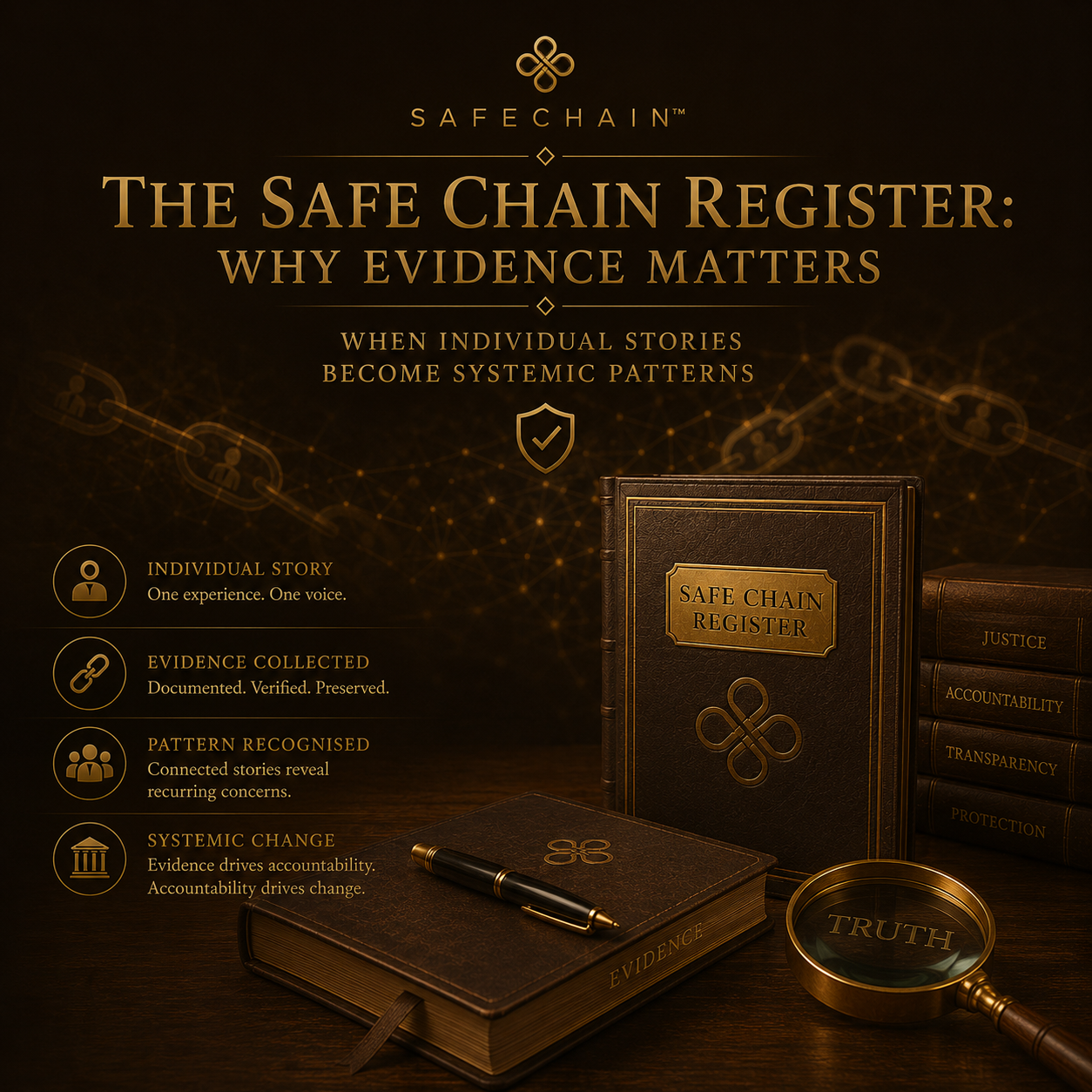
The SAFECHAIN™ Register gathers confidential evidence from survivors and vulnerable litigants to identify patterns, support reform, and assess possible pathways to accountability. xists to preserve evidence, identify recurring patterns, and support safeguarding, accountability, participation integrity, and institutional reform. It invites survivors of domestic abuse, coercive control, financial abuse, and vulnerable litigants to confidentially share factual experiences where they believe systems failed to protect, hear, or support them.

THE FUTURE OF SAFEGUARDING
The Future of Safeguarding: The New Standard concludes The Directive series by setting out a vision for safeguarding that moves beyond compliance and towards operational protection, participation integrity, accountability, and institutional trust.

TRAINING & CULTURE CHANGE
Policies alone do not create protection. This article examines organisational culture, safeguarding capability, leadership, training, and the SAFECHAIN™ Seal of Integrity as foundations for meaningful institutional change.
THE SOVEREIGN VERDICT™
What happens when procedure becomes more important than truth? This article introduces the Sovereign Verdict™ and explores why justice, safeguarding, accountability, participation, and governance all depend upon systems remaining connected to reality.

HOLDING POWER TO ACCOUNT
This article explores why jurisdiction is not merely a technical legal issue, but a safeguarding, governance, and participation issue. Through the SAFECHAIN™ concept of Jurisdictional Integrity™, it examines how venue, forum selection, procedural access, and structural fairness determine whether justice can be meaningfully delivered.
THE CLEAN BREAK PRINCIPLE
The Clean Break Principle is about more than financial settlement. This article explores economic abuse, financial sovereignty, participation integrity, and why true separation requires long-term independence, stability, and protection from ongoing control.