
Structural Silence, Coercive Personality Structures and the “Alter Ego” Problem in Family Proceedings
Corporate structures can be lawful, but in coercive control litigation they may also become vehicles for financial obfuscation, disclosure imbalance and procedural domination. This article examines the “alter ego” problem in family proceedings, the institutional integrity concerns raised by aggressive litigation conduct, and why safeguarding must move beyond discretion toward operational accountability.
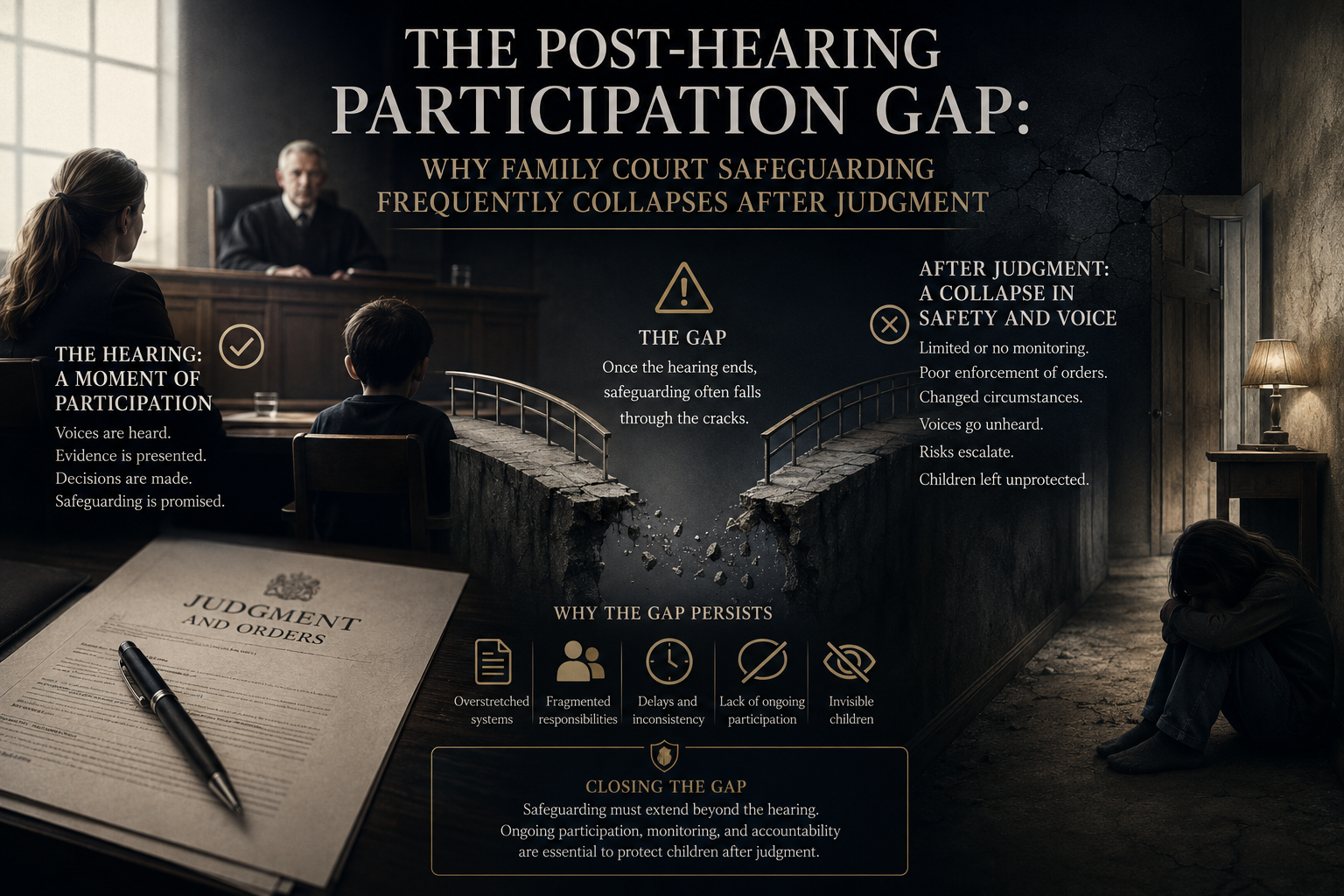
The Post-Hearing Participation Gap: Why Family Court Safeguarding Frequently Collapses After Judgment
Many survivors believe a family court order will bring closure, but for those facing coercive control, the post-hearing phase can become a new site of manipulation. This article examines vague drafting, enforcement barriers, implementation abuse and the safeguarding gap that emerges after judgment.
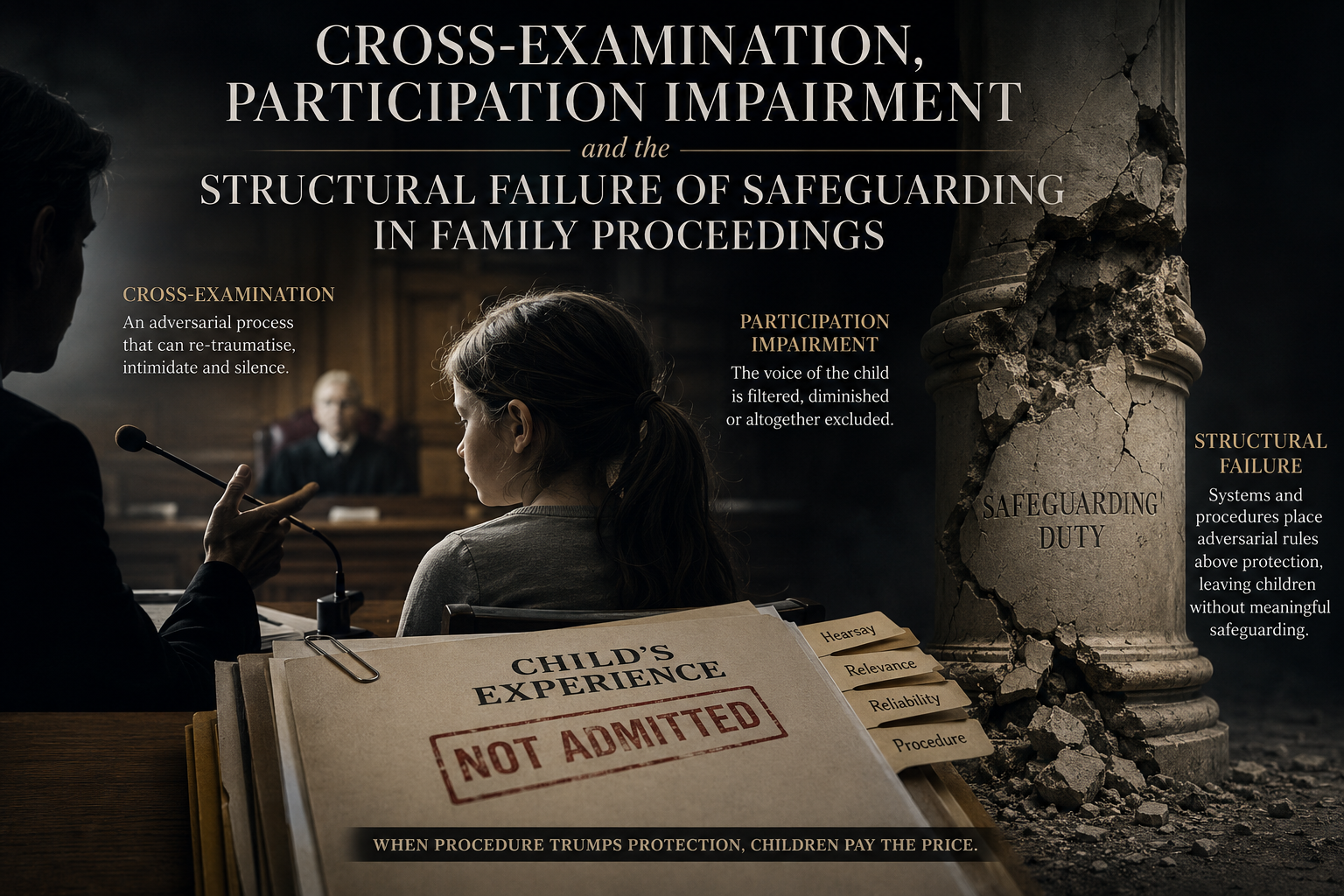
Cross-Examination, Participation Impairment and the Structural Failure of Safeguarding in Family Proceedings
The family justice system increasingly recognises vulnerability doctrinally while failing to operationalise it structurally. This contradiction is most visible during cross-examination, where trauma responses are routinely misinterpreted as credibility failures. The issue is no longer whether safeguarding exists in principle, but whether the system is capable of delivering meaningful participation in practice.

The Illusion of Participation: Why Being Present in Family Court Is Not the Same as Being Heard
Many survivors are physically present in family court but psychologically unable to participate effectively. This article examines the gap between attendance and meaningful engagement, exploring trauma, coercive control, Article 6 fairness, participation directions and why courts must move beyond procedural checklists toward trauma-informed justice.
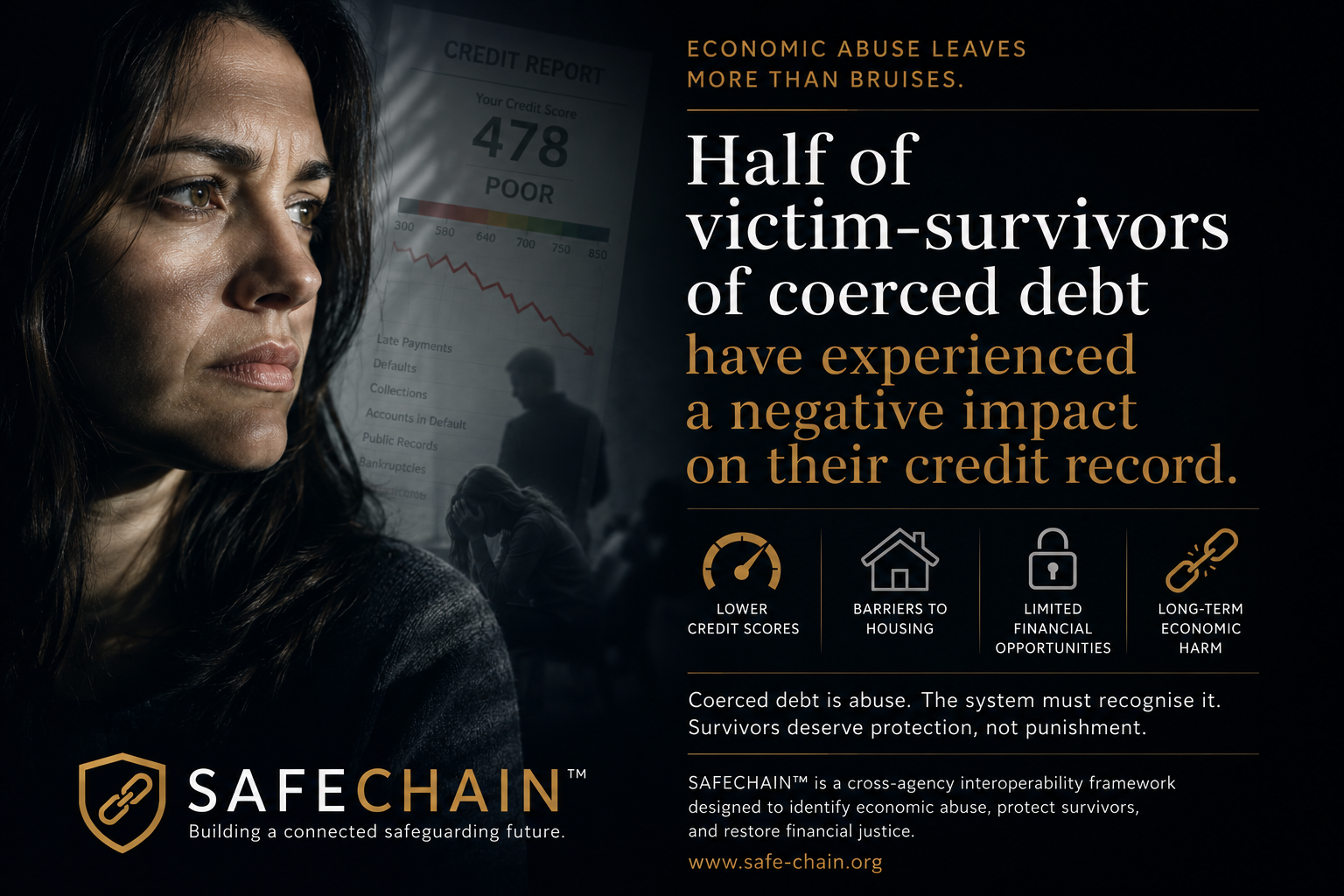
Coerced Debt Negative Impact on Their Credit Record
Coerced debt does not end when the abuse ends. For many survivors, damaged credit records, mortgage barriers and financial exclusion become a continuation of coercive control. This article explores why SAFECHAIN™ is proposing a connected safeguarding framework to protect survivors from credit destruction and economic erasure.

The Architecture of Erasure: Why Siloed Systems Enable Economic Abuse
Domestic abuse does not always end when a victim leaves. It can become financial, procedural, administrative and institutional. This article examines the architecture of erasure — how siloed systems across HMRC, Companies House, banks, credit agencies, Land Registry and family courts can allow economic abuse to continue through fragmented truth, contradictory disclosure and procedural imbalance

When Safeguarding Stops at the Courtroom Door
There is a word that appears in almost every piece of legislation designed to protect survivors of domestic abuse. It appears in the Children Act, the Care Act, the Domestic Abuse Act, and the procedural rules that govern family court hearings. Institutions display it in their mission statements. Agencies cite it in their policies. The word is safeguarding — and in courtrooms across England and Wales, it is being failed every day.

When Divorce Becomes a System of Control
Divorce from a high-conflict or coercively controlling partner is often not simply a legal ending. It can become an endurance test where delay, withheld disclosure, narrative control and financial pressure are used to keep survivors emotionally and procedurally tethered. This article examines how courts must look beyond paperwork, recognise patterns of coercive control, and apply stronger trauma-informed safeguarding measures.

The Cost of Fragmented Justice
When systems fail to connect, vulnerable people are often forced to reconstruct truth from fragmented records scattered across courts, Companies House, HMRC and financial institutions. This article examines how coercive control, financial abuse, hidden assets and procedural complexity can distort justice — and why institutional reform must move beyond isolated silos toward evidential continuity and trauma-informed accountability.

The Architecture of Silence
A powerful masterclass exploring how domestic abuse, coercive control, financial abuse, hidden assets, fragmented systems, and legal process can silence survivors — and why understanding the structure is the first step to reclaiming voice, truth, and justice.
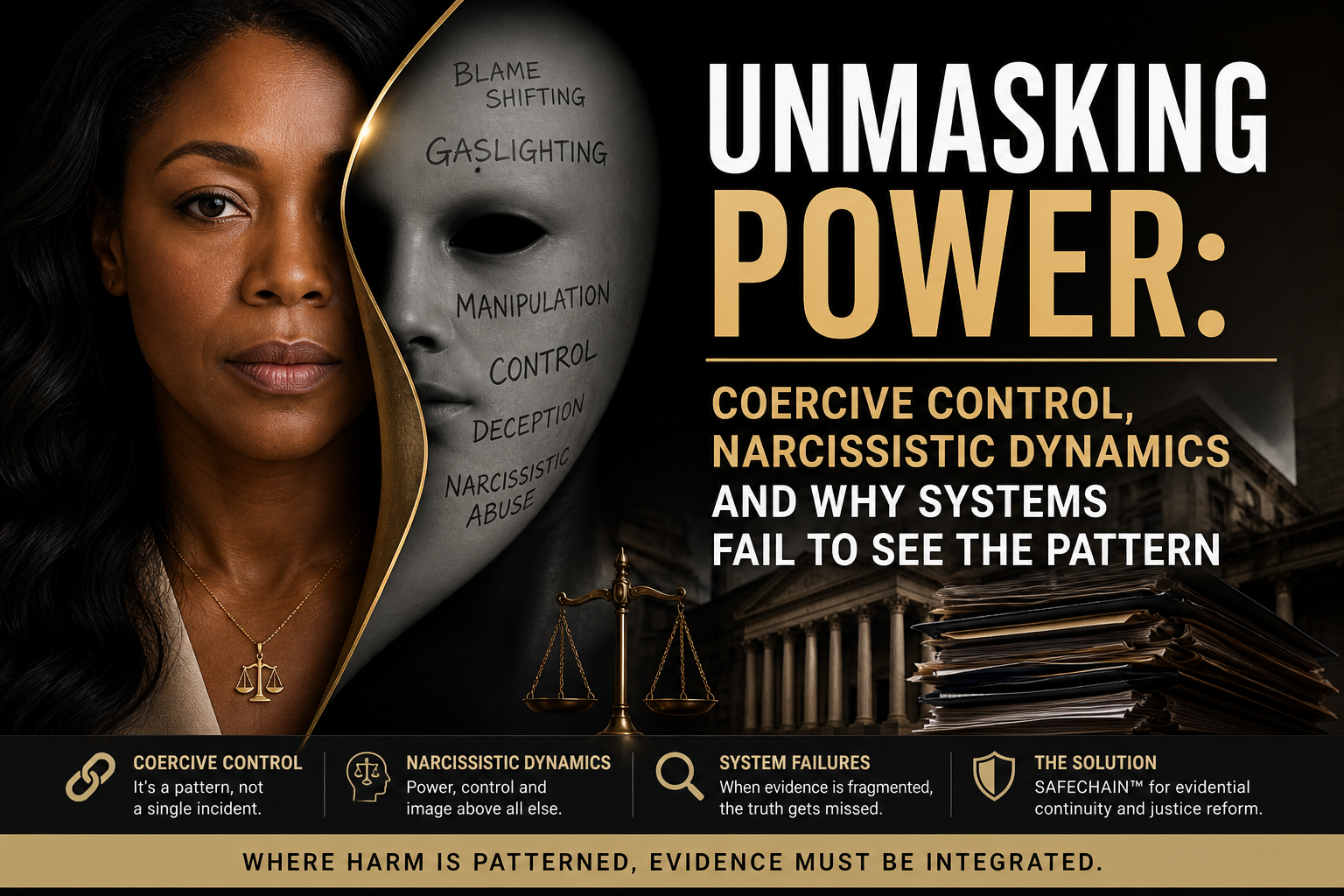
Coercive Control, Narcissistic Dynamics and Why Systems Fail to See the Pattern
Coercive control is rarely a single incident. It is a pattern of behaviour that can move through relationships, finances, paperwork, and legal process. This article explores how narcissistic dynamics distort truth, why survivors are often misread, and why systems must learn to connect fragmented evidence before justice can truly see the full picture.

When Systems Do Not Speak: Corporate Structures, Evidential Discontinuity and the Limits of Justice in UK Family and Financial Proceedings
When financial truth is fragmented across institutions, courts risk deciding cases without seeing the full picture. This article explores evidential discontinuity, corporate structures, and the structural gap between legal principle and operational reality.

When Personality Structure Meets Legal Process
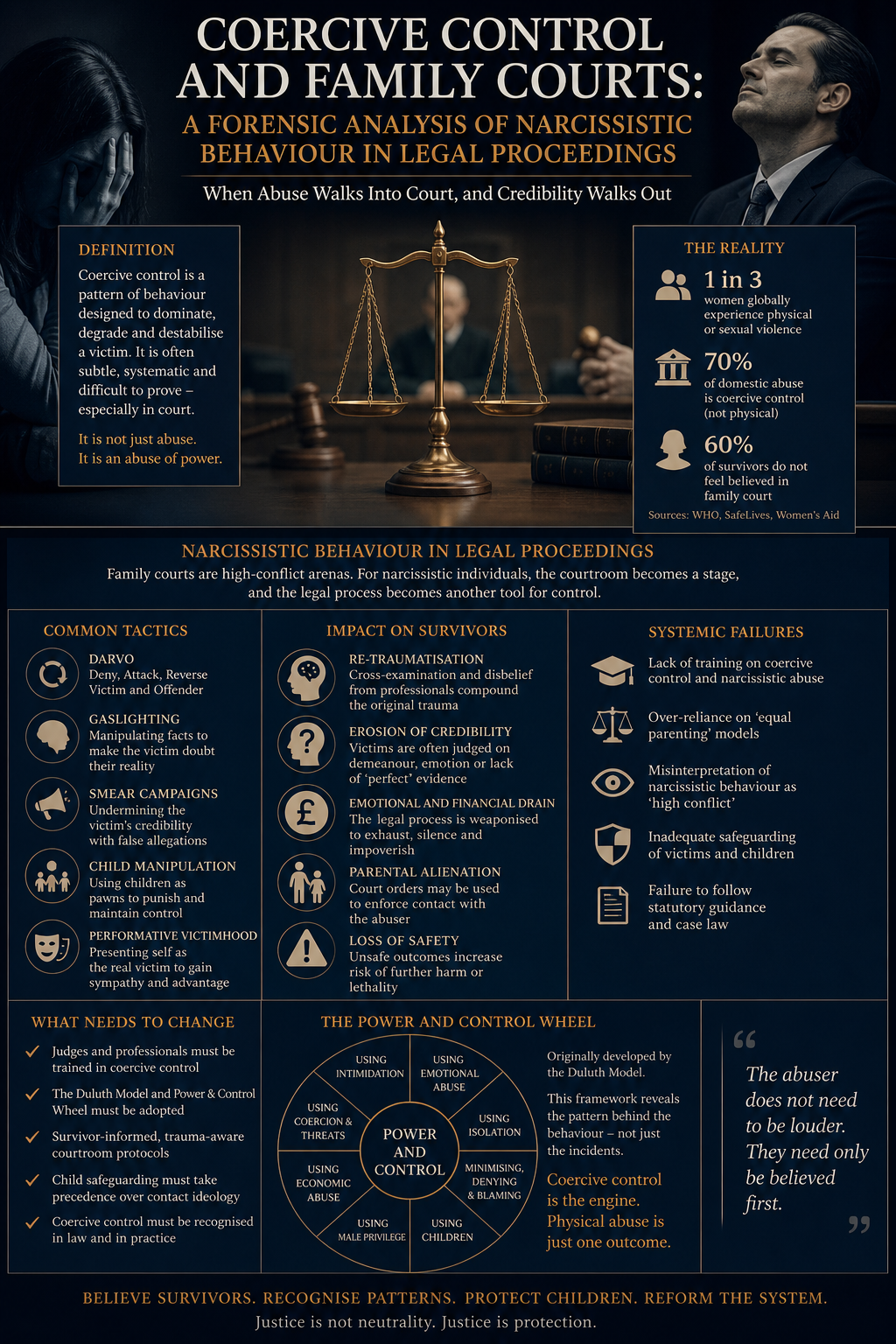
Coercive control is one of the most misunderstood forms of abuse in family court proceedings. Unlike physical violence, it operates through patterns—financial restriction, emotional manipulation, and psychological dominance over time.
This creates a critical evidential challenge: courts often assess individual incidents, while coercive control exists in the cumulative. Understanding this gap is essential to achieving fair outcomes.
Unmasking Power in Family Proceedings
Family courts are designed to assess evidence—but what happens when the most persuasive narrative is not the most truthful one?
In cases involving coercive control, harm rarely presents as a single incident. It emerges as a pattern—subtle, cumulative, and psychologically destabilising. Yet the legal system, still largely structured around discrete events, often struggles to capture this reality.
Where behavioural patterns are not properly interpreted, a dangerous inversion can occur: the controlled party appears inconsistent, while the controlling party appears credible.
The result is not merely misinterpretation—it is evidential distortion, where process risks reinforcing the very dynamics it is meant to dismantle.
The Economics of Harm: When Legal Process Becomes Industry
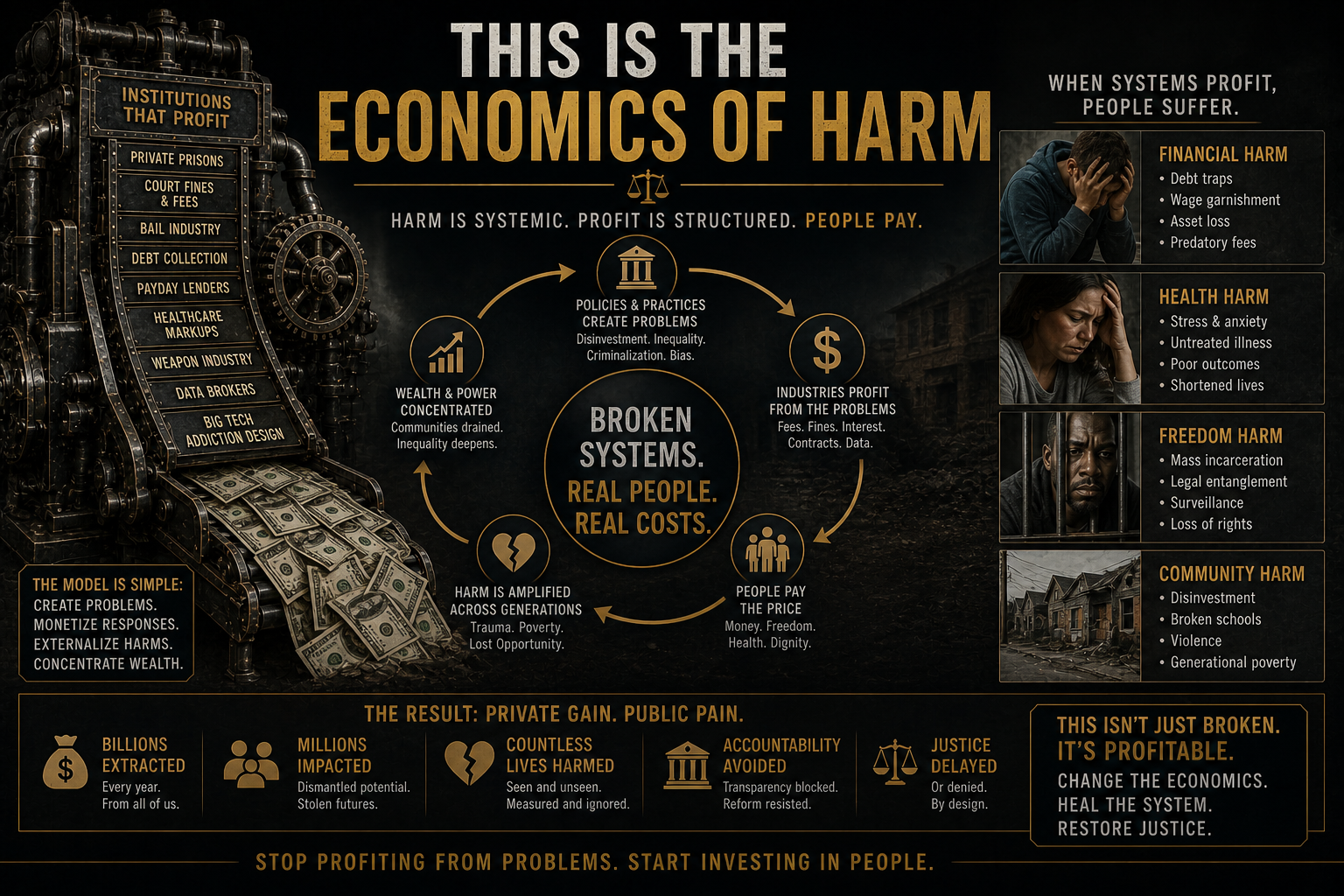
When conflict generates income, delay becomes profitable. This article examines the economics of harm in family proceedings, where legal complexity, disclosure failure, hidden assets, and fragmented financial records can turn legal process into an industry — and leave vulnerable parties paying the price.

WHITE PAPER - Evidential Discontinuity, Corporate Structures, and the Silo Problem:A Legal and Structural Analysis of Financial Truth in UK Proceedings
When HMRC, Companies House, Land Registry, courts and financial agencies do not speak to one another, truth becomes fragmented. This white paper examines how evidential discontinuity, corporate structures, alter ego principles and the corporate veil can affect disclosure, financial remedy proceedings, asset tracing and equality of arms. Grounded in UK law, it argues that justice cannot function on partial truth — and that system integration is now essential to protect fairness, transparency and procedural integrity.

Participation Impairment in Family Proceedings: When Presence Is Mistaken for Fairness
Participation is not presence. In family proceedings, the assumption that attendance equals engagement masks a deeper inequality—one that undermines fairness, breaches legal duty, and challenges the integrity of judicial outcomes.

Impartiality in Family Courts: Why Neutrality Alone Cannot Deliver Fairness
Impartiality is essential to justice, but neutrality alone does not guarantee fairness. In family court proceedings, where one party may have greater resources, stronger representation, better access to evidence, and greater procedural capacity, a neutral court can still produce an unequal outcome. This article examines the gap between procedural neutrality and substantive fairness, exploring Article 6, equality of arms, FPR Part 3A, PD3AA, the Matrimonial Causes Act 1973, and the continuing cultural failure to recognise how coercive control, financial abuse, and trauma affect meaningful participation.

Financial Distortion in Family Court: When Truth Becomes Unreliable in Financial Remedy Proceedings
Financial remedy proceedings depend on disclosure, valuation, credibility, and judicial scrutiny. But when income is minimised, assets are obscured, business value is distorted, and narrative is strategically shaped, financial truth can become unstable. This article examines how distortion enters the family court process, why it matters, and how procedural fairness can collapse when numbers are presented without full forensic context.

Unmasking Justice: Five Years On — The Structural Failure of Family Court Systems
Five years after domestic abuse was legally recognised beyond physical harm, family court systems continue to operate within structural and procedural gaps that undermine fairness. This white paper examines how disclosure failures, procedural advantage, and systemic fragmentation erode equality of arms under Article 6, leaving vulnerable parties at a significant disadvantage. It argues that while the law has evolved, the culture and operation of the courts have not kept pace—raising urgent questions about whether justice is being delivered in substance or only in form.